

Comfort Reading Accessories for Hands-Free Book Support
Comfort reading accessories are support tools that help hold, position, or control a book while reading. They are designed to make reading easier to manage in different environments and body positions. Hands-free book support is a comfort aid rather than a medical fix.
During long reading sessions, comfort can depend on how the reader, the book, and the reading surface work together. reading accessories are tools that support the reading activity by improving book control, positioning, or handling. A reading pillow may support the body or lap, while a book stand, book holder, or page holder may support the book itself. Supporting the body and supporting the book are related but different functions.
Holding a book for extended periods can create challenges with book weight, page control, and book stability. Hands-free support can help when a support tool keeps the book in a usable position and reduces the need for constant hand contact. Posture, reading position, and the stability of the reading surface also influence comfort outcomes. The next step is to consider support options alongside posture criteria rather than treating them as separate decisions.
Comfort reading accessories focus on hands-free book support and book control during reading. This scope does not include lighting, marking, storage, or general gift accessories. Fit depends on reading position, book format, book size, and the reader's specific comfort needs.
How comfort-focused reading accessories support the body and the book
Comfort-focused reading accessories support two distinct functions: body support and book support. Body support helps maintain a reading position, while book support helps manage book weight, page control, and stability. Together, these functions address the main comfort condition of keeping both the reader and the book in a more sustainable position during reading.
How comfort-focused reading accessories support the body and the book becomes clearer when the support relationship is visible. The image below shows how a support point can connect the reader, the reading surface, and the book or device being used.

Fit conditions may depend on book size, device type, reading surface, posture, and reading position. A support tool that creates a stable angle on one surface may work differently on another, and a supported body area may contribute to comfort only when the overall setup suits the reader.
| Support Focus | Accessory Type | Supported Area | Comfort Condition | Likely Effect |
|---|---|---|---|---|
| Body support | Reading pillow or support cushion | Supported body area | Stable reading position | May help maintain posture when the support matches the reading setup |
| Book support | Book holder or stand | Book or reading device | Stable angle and reduced hand load | May improve book stability and page control |
The distinction between body support and book support helps explain why different types that improve comfort may suit different reading situations. This section focuses on comfort support rather than broader reading accessories used for lighting, marking, or note-taking.
Main hands-free support options for reading
Hands-free support options for reading are accessory groups designed to hold, prop, stabilize, or reduce hand effort while using a book or reading device. Each accessory type supports a different reading task, from maintaining book stability to improving page control. The main comfort condition is matching the support function to the reading setup and reading position.
Main hands-free support options for reading differ by what they support and how they affect comfort or usability. The image below highlights common support categories and the role each category can play during reading.

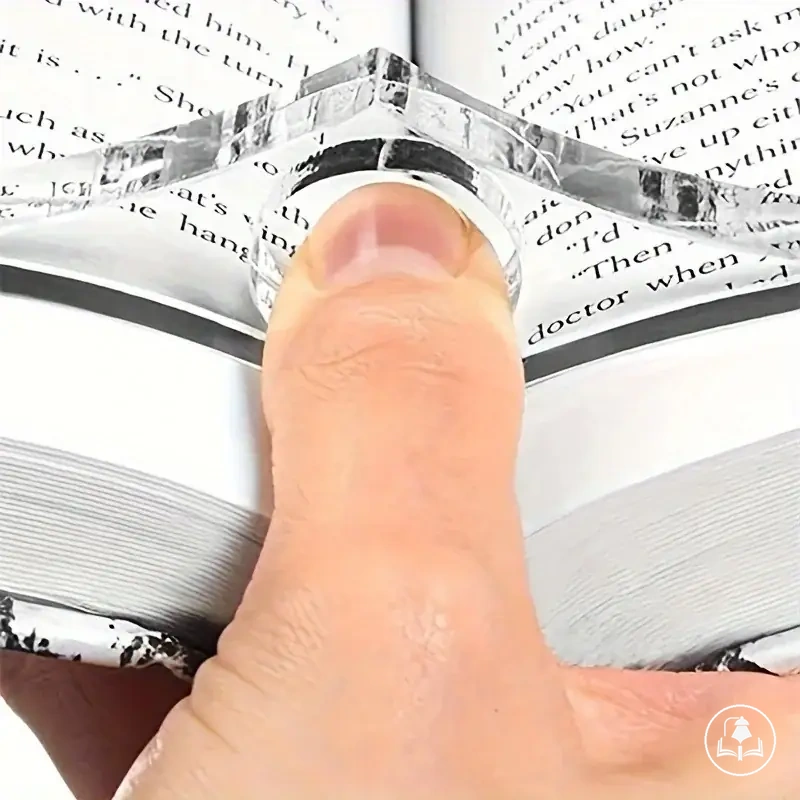
A book holder or adjustable book stand is designed to support the full book and maintain a reading angle on a stable surface. A reading pillow or lap support can position reading material closer to the reader, while suitability may depend on cushion firmness, posture, book size, or reading surface. A page holder or thumb book holder focuses on page spread and page control rather than full book support, which can help reduce hand effort during reading.
| Accessory type | Support function | Fit condition | Comfort or usability effect |
|---|---|---|---|
| Book holder | Holds and stabilizes a book | Depends on book size and a stable surface | May improve book stability and viewing consistency |
| Adjustable book stand | Props a book at a selected angle | Depends on surface position and reading setup | May support a stable reading angle |
| Reading pillow or lap support | Supports reading material closer to the reader | Varies by cushion firmness and posture | May contribute to a more relaxed reading position |
| Page holder or thumb book holder | Supports page spread and page control | Depends on book thickness and grip preference | May reduce repeated hand effort while holding pages |
These accessory categories are support tools rather than a complete map of reading accessories. Their differences become clearer when support attributes, fit conditions, and usage limitations are considered together.
Book holders and adjustable reading stands
When reading at a desk, table, or other support surface, a book holder or adjustable reading stand can keep a book positioned at a stable angle with less need for continuous hand support. Book holders and adjustable reading stands are designed to hold, adjust, and stabilize reading material while maintaining page access. The main comfort condition is maintaining a stable angle that suits the reading position and viewing height.
Book holders and adjustable reading stands differ in how they manage stand height, angle range, and book support. The image below highlights the parts and fit conditions that influence stability, compatibility, and page access.

An adjustable reading stand may allow changes to stand height or angle range, while a book holder may focus on supporting a book on a fixed base surface. Suitability can depend on book size, the stability of the base surface, and how a ledge or clamp interacts with the book. For example, a clamp may hold thicker books more securely in some situations, while page access may vary depending on page-turning needs.
Book holders and adjustable reading stands can be evaluated through a few stand-specific checks that clarify fit and usability.
- Check whether the stand height supports the intended viewing position for the reading surface being used.
- Confirm that the angle range allows a stable angle for the book or reading device.
- Assess the base surface for stability, especially when slip risk may affect positioning.
- Review how the ledge or clamp supports the book size without unnecessarily restricting page access.
- Consider whether page turning remains practical when the book is held in place for hands-free reading.
Reading pillows and lap support cushions
During relaxed reading, a reading pillow or lap support cushion can help support the book, the reader, or both, reducing the need to continuously hold reading material in place. Reading pillows and lap support cushions are designed to cushion support points and improve lap stability during seated or reclined reading. The main comfort condition is matching cushion support to body position and book weight.
A reading pillow may provide back support or elevate reading material, while a lap support cushion may focus on stabilizing book weight across the lap. Suitability can depend on cushion firmness, cushion height, posture, and the size of the book or reading device. For example, improved lap stability may reduce hand effort when a heavier book remains supported rather than being held for extended periods.
Reading pillows and lap support cushions can be assessed through a few support-specific checks that clarify fit and usability. Cushion support depends on body position and book weight, so these checks help verify whether the support setup matches the reading situation.
- Check whether cushion firmness supports the intended reading position without excessive shifting.
- Assess whether cushion height keeps reading material at a usable viewing level for relaxed reading.
- Consider whether lap stability remains consistent as book weight changes.
- Review whether the support cushion primarily supports the reader, the book, or both.
- For reclined reading, confirm that back support and book positioning work together without limiting reading access.
When reading regularly in bed, broader setup considerations may be covered by bed reading accessories, while this section remains focused on cushion firmness and lap support behavior.
This chart shows the purpose, key comfort conditions, and support-specific checks for reading pillows and lap support cushions.

Page holders and thumb book holders
During one-handed reading, a page holder or thumb book holder helps keep pages open and improves page control rather than providing full book support. Page holders and thumb book holders are designed to maintain page spread and reduce repeated grip adjustments while reading. The main comfort condition is maintaining page control with a suitable grip and hand position.
A page holder or thumb holder can hold pages open, but the reader may still need to support the book itself. Suitability can depend on holder shape, book thickness, hand position, and the amount of page pressure applied. If a book has a stiff binding or resists staying open, page control may vary depending on how the page support interacts with the pages and binding.
Page holders and thumb book holders can be checked against a few fit and control conditions that clarify usability during reading. These checks help verify whether the tool improves page spread and grip without creating unnecessary limitations.
- Check whether the holder shape provides a secure grip without making hand position difficult to maintain.
- Assess whether the page spread remains open with the book thickness being used.
- Consider whether one-handed reading remains practical or if the book still requires additional support.
- Review whether page pressure remains appropriate for delicate pages or books that are sensitive to handling.
- Confirm that page control improves without unnecessarily restricting page turning.
This chart shows the main purpose, factors affecting suitability, and key usability checks for page holders and thumb book holders when reading one-handed.

Posture factors that affect reading comfort
Posture comfort depends on adjustable conditions rather than a single accessory or reading position. Reading posture can change as eye level, head angle, arm position, and book stability change during a reading session. The main comfort condition is how body and book factors work together over session length.
Body factors and book factors can influence comfort signals in different ways. For example, eye level and viewing distance may affect head angle, while book stability may influence wrist effort and arm position. The effect can vary depending on book size, reading surface, body position, or device type, so a support change that improves one condition may shift discomfort elsewhere.
Posture factors that affect reading comfort can be evaluated through a set of support criteria. The table below organizes common conditions, possible comfort risks, and adjustment implications.
| Factor | Condition to check | Comfort risk | Adjustment implication |
|---|---|---|---|
| Eye level | Reading material sits too high or too low | Head angle may become harder to maintain | Adjust support position or viewing height |
| Head angle | Neck remains tilted for extended periods | Comfort signals may become less favorable over session length | Review reading posture and viewing distance |
| Shoulder load | Shoulders support book weight continuously | Holding effort may increase over time | Consider whether additional book stability is needed |
| Arm position | Arms remain extended or unsupported | Hand fatigue may become more noticeable | Adjust body position or support placement |
| Wrist effort | Wrist remains bent while controlling pages | Page control may require more effort | Review grip method or support criteria |
| Book stability | Book shifts during reading | Repeated repositioning may interrupt reading comfort | Improve support consistency |
| Session length | Reading continues for longer periods | Small posture issues may become more noticeable | Monitor comfort signals and adjust conditions |
These criteria help identify whether an accessory improves comfort or shifts effort to a different body or book factor. Observing comfort signals across multiple conditions can provide a clearer basis for choosing by reading habit.
Reading angle, eye level, and head position
Reading angle, eye level, and head position depend on how book height and viewing distance work together during reading. When these conditions are better aligned, head position may remain more consistent, while a poor match can lead to repeated adjustment. The main comfort condition is aligning reading angle, eye level, and viewing distance for the reading setup being used.
Reading angle, eye level, and head position can change as stand angle, book height, and body position change. In an upright position, a different book height may be suitable than in a reclined position because viewing distance and viewing angle often change. Fit depends on book size, reading surface, posture, and device type, so no fixed stand angle or book angle suits every situation.
Reading angle, eye level, and head position can be evaluated through a few viewing-geometry checks that clarify when adjustment may help.
- Check whether the reading angle supports a comfortable relationship between eye level and viewing distance.
- Assess whether book height matches the intended upright position or reclined position.
- Consider whether a stand angle adjustment improves alignment between the book and head position.
- Review whether viewing distance remains practical when book size or device size changes.
- Avoid treating any single viewing angle, head angle, or book angle as an ideal solution for every reading setup.
This chart shows the main factors that influence reading angle alignment and the evaluation checks to ensure comfortable reading posture.

Neck, shoulder, arm, and wrist strain
Neck, shoulder, arm, and wrist strain depends on how support gaps affect reading comfort over time. When a book requires continuous holding, reaching forward, or prolonged page holding, a comfort signal may become more noticeable as session duration increases. The main comfort condition is reducing support gaps that increase effort across session duration.
Support gaps can appear differently depending on book size, reading surface, posture, or device type. A tool may reduce hand grip effort by supporting the book, yet a separate adjustment to book height or reading angle may still be needed when the reading position remains difficult to maintain. Neck, shoulder, arm, and wrist strain can be assessed through non-medical observations that focus on comfort signals rather than outcomes.
Neck, shoulder, arm, and wrist strain can be evaluated through a few non-medical observations that help clarify support gaps and adjustment needs.
- Check whether neck bend becomes more noticeable when book height does not suit the reading position.
- Assess whether shoulder elevation increases when reaching forward to support book weight for extended periods.
- Consider whether forearm load rises when page holding requires continuous support from one arm.
- Review whether wrist angle or hand grip needs repeated adjustment to maintain page control.
- Observe whether session duration changes comfort signals, even when the reading setup initially appears suitable.
Book stability, page control, and hand fatigue
Book stability, page control, and hand fatigue depend on how easily a book remains open and supported during reading. When a book shifts position, pages close unexpectedly, or page control requires continuous effort, hand fatigue may become more noticeable during longer reading sessions. The main comfort condition is maintaining book stability and page control with less repeated hand effort.
Book stability, page control, and hand fatigue can vary with book size, book weight, binding stiffness, reading surface, and reading position. A larger book or a book with greater binding stiffness may require more effort to maintain page spread, while lap movement or limited stand grip may reduce stability in certain conditions. In some cases, book format can materially change page behavior and affect how often page control adjustments are needed.
Book stability, page control, and hand fatigue can be evaluated through a few practical checks that clarify stability conditions and support needs.
- Check whether book size and book weight reduce book stability when the reading surface shifts or moves.
- Assess whether binding stiffness affects page spread and increases the need for ongoing page control.
- Consider whether stand grip remains secure when book control depends on a support surface rather than continuous hand holding.
- Review whether thumb pressure or lap movement increases slip risk and requires repeated repositioning.
- Observe whether hand fatigue becomes more noticeable as session length increases and page behavior requires additional hand effort.
Matching support accessories to reading positions
Matching support accessories to reading positions depends on where reading happens most often and what support requirement that position creates. Different reading positions change support needs, so a support accessory should match the reading position, support surface, and adjustment need rather than rely on a single solution. The main comfort condition is achieving a suitable support match between reading position and reading setup fit.
Reading position can change how book size, support surface, and stability affect accessory fit. Upright reading and desk reading may require support that helps maintain book position on a stable surface, while reclined reading or lap reading may require support that adapts to body position and movement. When readers switch between positions or use different book formats, adjustment need may become a more important selection criterion than any single accessory feature.
Matching support accessories to reading positions becomes easier when the support requirement, accessory fit condition, and comfort outcome are evaluated together. The table below organizes common position-based selection criteria.
| Reading position | Support need | Suitable accessory type | Fit caution |
|---|---|---|---|
| Upright reading | Stable book position and viewing angle | Book stand or book holder | Fit may depend on book size and adjustment need |
| Desk reading | Surface-supported book stability | Adjustable stand | Support surface stability can affect usability |
| Reclined reading | Position-adaptive support | Reading pillow or support cushion | Suitability may vary with posture and book weight |
| Lap reading | Book support during movement | Lap support cushion | Lap movement may reduce stability in some situations |
Readers who alternate between upright reading, reclined reading, and desk reading may benefit from prioritizing adjustment need over a fixed setup because support requirements can change as reading position changes. A broader reading accessories setup can help connect position-based selection with the overall reading environment.
The products below are useful examples for comparing available options. Before buying, check that the compatibility criteria, key features, and product details match your needs.


Upright, reclined, lap, and desk-supported reading
Upright reading, reclined reading, lap reading, and desk-supported reading depend on different support needs because weight distribution and viewing angle change with position. Upright reading and desk-supported reading often rely more on surface stability and book angle, while reclined reading and lap reading may require greater arm support and flexibility. The main comfort condition is matching support needs to the reading position and available adjustment range.
Upright reading and desk-supported reading may suit a stand when surface stability supports consistent book positioning and book angle adjustment. Reclined reading may suit a pillow when body position changes how reading material is supported, while lap reading may suit lap support when movement affects stability. Accessory fit can depend on book size, surface stability, posture, and adjustment range, so the support choice should follow the position-specific requirement.
- Upright reading usually requires stable book positioning and a suitable viewing angle.
- Desk-supported reading depends on surface stability and sufficient adjustment range for book angle changes.
- Reclined reading may require more arm support when the reading position changes during a session.
- Lap reading can require additional stability when lap movement affects book control.
When reclined reading becomes the primary reading scenario, broader considerations may be covered by bed reading accessories, while this section remains focused on position-specific support logic.
Paper books, large books, tablets, and e-readers
Paper books, large books, tablets, and e-readers depend on different support requirements because holder fit depends on thickness, weight, dimensions, and surface friction. A holder that suits one format may not provide the same stability or usability outcome for another format. The main comfort condition is achieving appropriate holder fit for the format being used.
Paper books, large books, tablets, and e-readers vary in how their physical attributes affect support. The table below organizes format attributes, holder conditions, and the stability implications that can influence reading usability.
| Format | Attribute to check | Holder condition | Stability implication |
|---|---|---|---|
| Paperbacks | Thickness and page spread | Support should accommodate binding movement | Page control may vary with book flexibility |
| Hardbacks | Weight and dimensions | Ledge support should suit the book size | Greater weight may require increased stability |
| Large books | Size and weight | Holder fit depends on support capacity and positioning | Book angle may be harder to maintain when support is limited |
| Tablets | Surface friction and dimensions | Holder fit may depend on grip and contact points | Lower surface friction can reduce stability in some setups |
| E-readers | Weight and dimensions | Holder condition should match device size | Stability may depend more on positioning than weight |
Paper books and large books often change support requirements through weight, thickness, and page behavior, while tablets and e-readers may change support requirements through dimensions and surface friction. Compatibility depends on format-specific attributes rather than assuming a holder provides a universal fit.
Using hands-free reading support during long sessions
Using hands-free reading support during long sessions depends on ongoing adjustment rather than keeping the same position throughout extended reading. Long reading sessions often benefit from comfort support that adapts to changes in height, distance, page access, and support stability. The main comfort condition is maintaining usable fit through continuous comfort monitoring.
Comfort support may require small adjustments when book changes, posture changes, or device type changes alter reading conditions. A change in height or distance may improve one comfort signal while reducing page access or changing hand position, so reader comfort signals are most useful when viewed together. Poor adjustment can shift discomfort from one area to another if support stability improves but viewing distance becomes less suitable.
Using hands-free reading support during long sessions can be monitored through a few practical checks. The checklist below helps clarify whether comfort support continues to suit longer reading periods as conditions vary.
- Check whether height and distance still support comfortable viewing after changing books or devices.
- Monitor whether page access remains practical without frequent repositioning.
- Assess whether support stability remains consistent when posture or the reading surface changes.
- Observe whether breaks in hand position improve usability without reducing book control.
- Review reader comfort signals when session length, book format, or reading position changes.
When long-session comfort depends on multiple conditions working together, a broader reading accessories setup may help connect adjustment choices with the overall reading environment.
This chart shows how hands-free reading support requires continuous adjustment and practical monitoring to maintain comfort during extended reading sessions.

Adjusting height, distance, and page access
Adjusting height, distance, and page access starts with preserving clear viewing and easy page movement during active reading. Height, viewing distance, and book angle may need small adjustments as book size, posture, or support conditions change. The main comfort condition is maintaining clear viewing without limiting page access.
Height, distance, and page access can depend on book size, support surface, posture, or device type. A higher position may improve viewing distance in one situation but reduce hand reach or page turning space in another. If a propped book makes page turning harder, checking book angle, stand stability, or cushion stability may help identify the local issue.
Adjusting height, distance, and page access can be reviewed through a few practical checks. The checklist below helps clarify whether positioning continues to support usability and comfort.
- Check whether viewing distance preserves a clear page without requiring frequent repositioning.
- Assess whether book angle supports page access while maintaining comfortable viewing.
- Confirm that hand reach remains practical when turning pages or changing reading position.
- Review whether page turning space remains available around the book or device.
- Observe whether stand stability or cushion stability continues to support relaxed shoulders during reading.
Comfort limits and fit problems to check
Discomfort can remain when support height, angle, stability, or page control is mismatched to the reading setup. Comfort limits and fit problems often indicate that the accessory, book, body position, or reading surface is not working together effectively. The first fit condition to check is support stability.
Slipping is a clear problem sign that may suggest a surface condition or stability mismatch. If a holder, cushion, or support shifts during reading, the implication may be that the support surface, book size, or adjustment range does not suit the current setup. Comfort limits can become more noticeable when stability changes during a reading session.
Overreaching, an awkward neck angle, wrist pressure, and unstable pages are non-medical comfort signals that may indicate fit issues. If page access requires too much hand reach, the likely fit condition may involve book position or support angle. If unstable pages require repeated control, the implication may be that page support or book stability needs further evaluation.
Heavy books and limited adjustment are selection implications rather than guaranteed fixes. A heavy book may suggest that support limits are being reached, while limited adjustment may indicate that the available height or angle range does not match the reading position. These conditions may qualify whether a support option remains practical for a particular reading setup.
Comfort limits and fit problems to check can be interpreted through problem signs, likely fit conditions, and adjustment or selection implications. When problem signs persist across different positions or books, reviewing related comfort and fit problems may help clarify whether the issue is tied to support limits, adjustment range, or overall setup compatibility.
The products below are useful examples for comparing available options. Before buying, check that the compatibility criteria, key features, and product details match your needs.
- Slipping may indicate a surface or stability mismatch, so check support stability and surface condition.
- Overreaching may indicate a position mismatch, so check book placement and hand reach requirements.
- An awkward neck angle or wrist pressure may indicate a height or angle mismatch, so review support positioning.
- Unstable pages may indicate a page-control limitation, so check page support and book stability.
- Heavy books or limited adjustment may indicate holder limits, so consider whether support capacity or adjustment range suits the reading setup.
This chart shows the main problem signs of comfort limits and fit issues in reading setups and the corresponding checks to identify the root cause.
